Why Timing the Market in Mutual Funds Doesn’t Work (And What Actually Builds Wealth)

Timing the Market in Mutual Funds Doesn’t Work

“Sensex is down today… should we invest now?”

If I had a rupee for every time I heard that, I would probably start another SIP just for fun.

It sounds logical. Markets fall, prices are cheaper, so it must be a good time to invest. But here’s the uncomfortable truth:

👉 Trying to time the market in mutual funds is largely irrelevant – and often harmful.

Let’s break this myth properly and understand what actually creates long-term wealth in mutual funds.

Why “Sensex is Down” Doesn’t Mean It’s the Right Time to Invest

Most investors assume that when the Sensex falls, all mutual funds become cheaper.

That’s not how it works.

  • Sensex tracks only 30 large companies
  • Mutual funds may hold 50 to 100 stocks
  • Midcap and small-cap funds behave very differently
  • Fund managers actively rebalance portfolios

So in reality:

  • Sensex may be down
  • Midcaps could be up
  • Your mutual fund may behave very differently


👉 Conclusion: Index movement is not a reliable signal for mutual fund investment timing.

Mutual Funds vs Direct Stocks: Why Timing Doesn’t Work the Same Way

If you are investing in direct equities, timing can matter.

But in mutual funds:

  • Fund managers are already making buy/sell decisions
  • Portfolios are diversified
  • Allocation keeps changing


Trying to time mutual funds is like trying to outplay a professional who is already managing your money full-time.

What Market Data Clearly Shows About Timing the Market

Here’s a simple but powerful reality:

👉 Missing just a few of the best market days can significantly reduce long-term investment returns.

And here’s the twist:

  • The best days often come right after sharp falls
  • If you wait or panic, you miss recovery

This is why reacting to volatility usually hurts returns.

If you want to understand volatility better and how to deal with it, this is worth reading:

👉 Market Volatility

Why SIP in Mutual Funds Works Better Than Timing the Market

Systematic Investment Plans (SIPs) remove emotion from investing.

  • Invest regularly
  • Buy more when markets fall
  • Buy less when markets rise
  • Average out cost over time

This is one of the simplest and most effective ways to build wealth through mutual fund investing.

If you want to see how starting small and staying consistent works:
👉 Start & be Consistent

And if you still feel tempted to time markets:
👉 SIP Myths

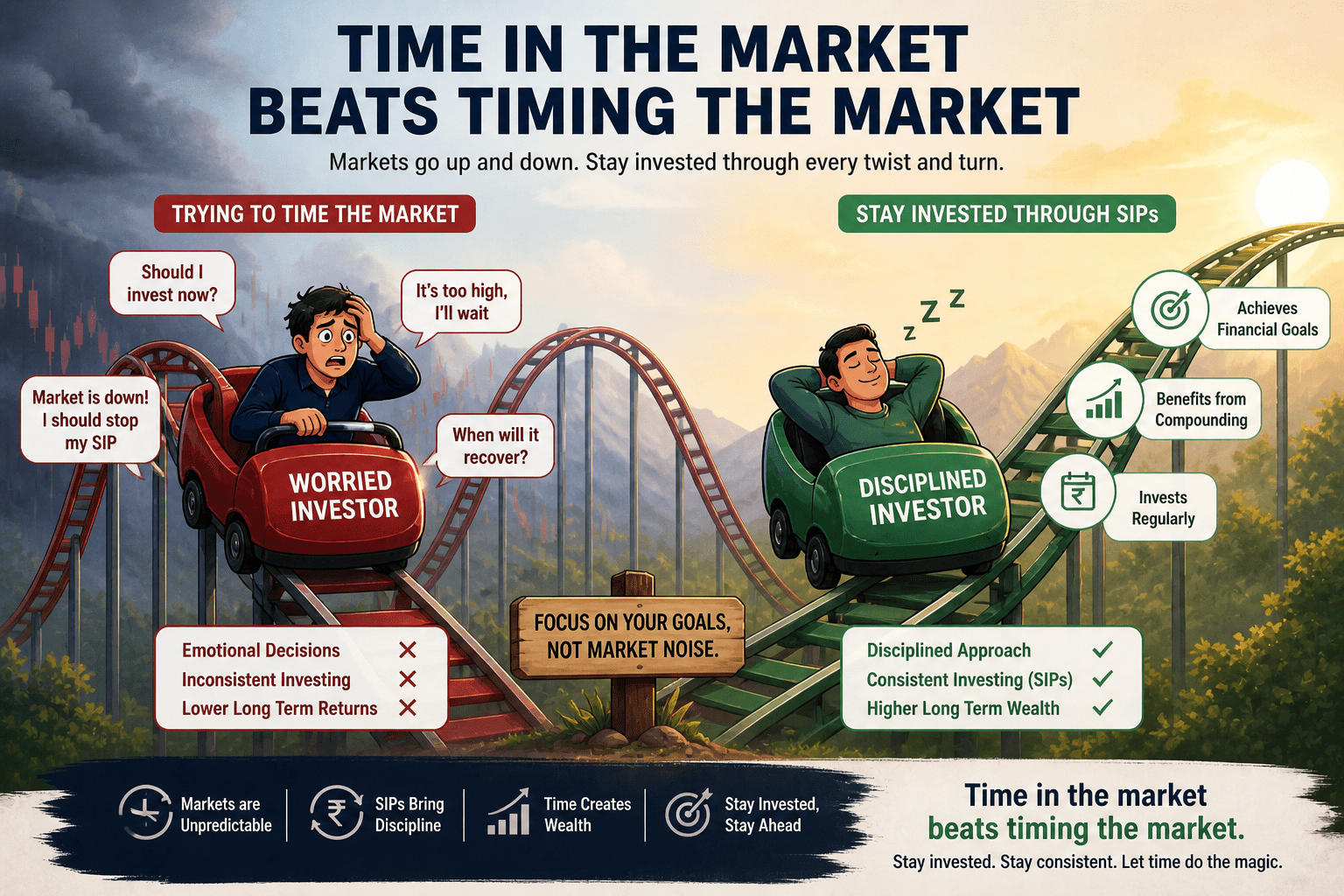
The Biggest Mistake: Stopping SIPs During Market Falls

This is where most investors go wrong.

Markets fall → panic → SIP stopped → investments redeemed

This leads to:

❌ Buying high
❌ Selling low

Exactly the opposite of wealth creation.

Many of these behavioural mistakes are discussed here:
👉 Behaviour Mistakes

Why You Cannot Consistently “Buy the Bottom”

Let’s be honest.

Nobody consistently buys at the bottom:

  • Not investors
  • Not professionals
  • Not fund managers

Because:

  • The bottom is visible only in hindsight
  • Markets can fall further
  • Waiting often leads to inaction

Trying to control every entry point often slows down wealth creation through mutual funds.

Read more:
👉 Micromanaging your Mutual Funds

Investing Across Market Cycles Builds Long-Term Wealth

Wealth is not created in one phase.

It is built across:

  • Bull markets
  • Bear markets
  • Sideways markets

Each phase plays a role.

Bear markets, in particular, are where real wealth is quietly built.

Long-Term Investing Makes Market Timing Irrelevant

If you stay invested long enough:

  • Short-term volatility becomes noise
  • Market corrections lose importance
  • Compounding takes over

And this is where the real magic happens:
👉 Power of Compounding

At this stage:

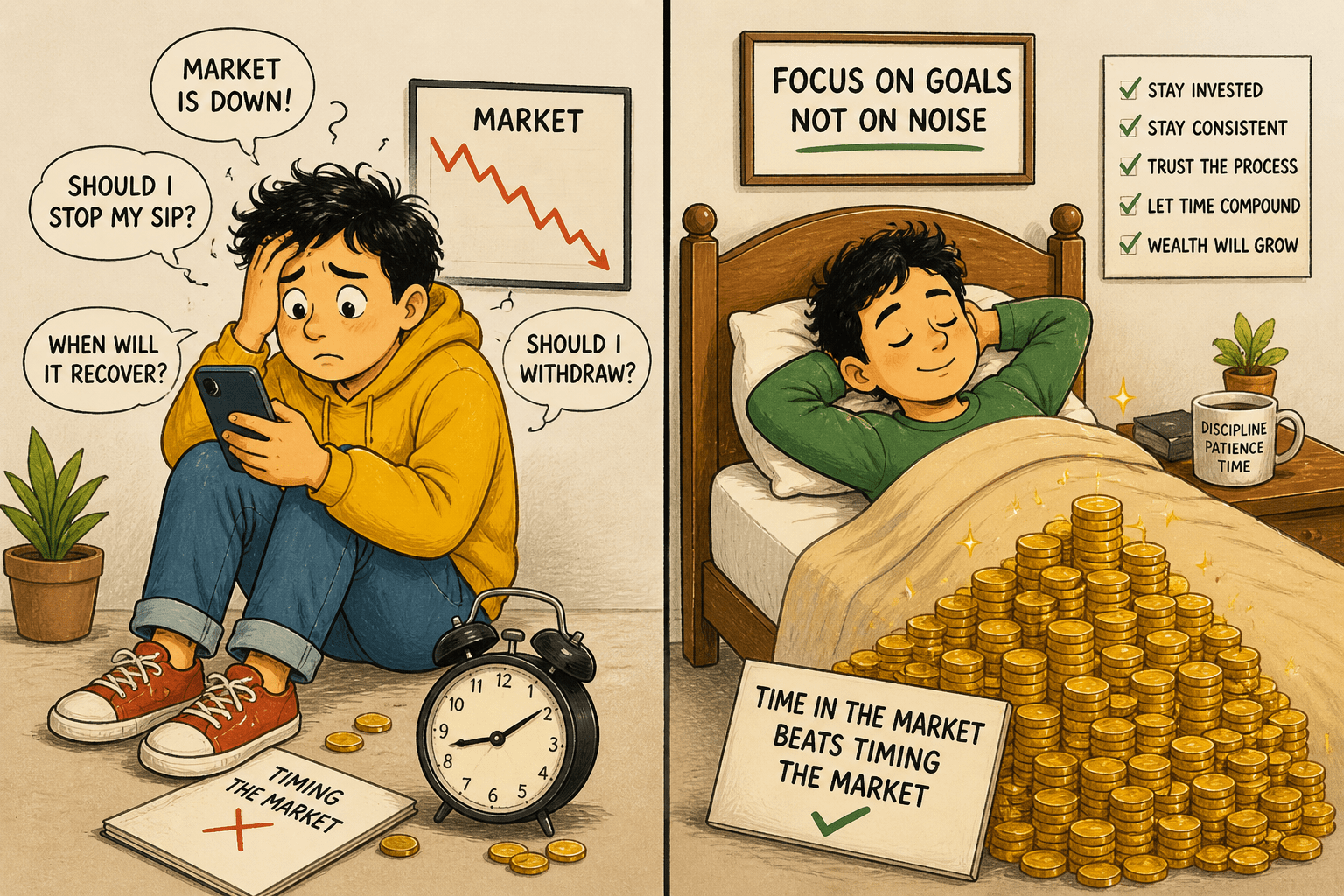
👉 Time in the market matters more than timing the market.
What Actually Matters More Than Timing the Market

Instead of focusing on “when to invest,” focus on:

1. Consistency

Regular investing beats perfect timing.

2. Asset Allocation

The right mix matters more than entry point.

3. Goal-Based Investing

Invest with purpose, not prediction.

4. Risk Alignment

Your comfort matters more than market noise.

5. Investor Behaviour

Your reactions matter more than returns.

For a broader perspective on how wealth is actually built:

👉 Boring way to build wealth

Final Reality Check

Two investors start:

  • One waits for the perfect time
  • One invests consistently

After 10–15 years…

The disciplined investor wins.

Not because they were smarter.
But because they stayed invested.

The Bottom Line: Stop Timing the Market, Start Investing

  • Mutual funds are not meant to be timed
  • Market falls are part of the journey, not signals
  • SIPs and STPs bring discipline
  • Stopping investments destroys long-term returns
  • Time in the market beats timing the market


As I always say, financial planning is not about reacting to markets – it’s about preparing for life. Stay disciplined, stay invested, and let time do its job.

If you found this useful, explore more insights on my website and stay updated.

👉 Follow my YouTube channel for practical investing guidance.
👉 Read more blogs on Financial Radiance.